





Material Costs in 2026: How They Affect Flooring Prices
If you’re planning a flooring upgrade or home renovation in 2026, you may notice that prices for materials and installation have changed compared to previous years. The cost of construction materials — including wood, vinyl, tile, and adhesives — plays a major role in determining the final price of flooring projects.
Across Springfield, Northampton, Westfield, and throughout Hampden and Hampshire County, homeowners are seeing price adjustments as the construction industry responds to inflation, supply chain changes, and global demand for raw materials.
Understanding what’s happening with material costs can help homeowners plan projects more effectively and avoid surprises during renovation.
Why Material Prices Have Changed
Several economic factors are influencing construction and flooring costs in 2026.
One of the biggest drivers is overall construction inflation. In 2025, construction material prices rose about 6.2% according to the Producer Price Index, continuing the trend of rising building costs in recent years.
At the same time, tariffs on metals and construction inputs such as steel and aluminum have increased manufacturing costs for many building products. These increases often work their way down to materials used in flooring installation and renovation projects.
While inflation has slowed compared to the pandemic years, the cost of building materials is still significantly higher than pre-2020 levels.
Lumber and Hardwood Flooring Costs
Wood products remain one of the biggest cost factors in the flooring industry.
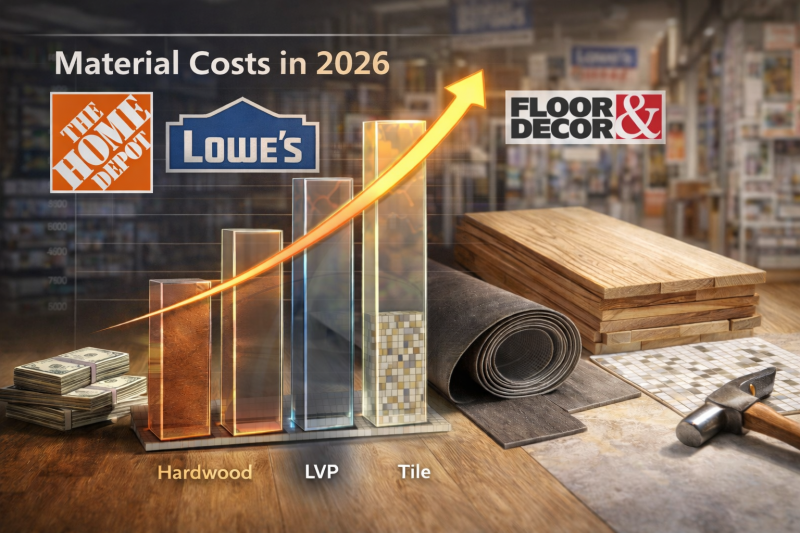
Hardwood flooring materials typically range between $3 and $15 per square foot, with installation adding another $4 to $8 per square foot depending on the project complexity.
Lumber prices have also been affected by supply constraints and mill closures in North America. Market forecasts suggest wood demand will stabilize in 2026 but supply limitations could still influence pricing.
Some forecasts even suggest lumber prices could rise significantly during parts of 2026 if supply disruptions continue.
For homeowners, this means hardwood floors remain a premium option but still provide strong long-term value.
Luxury Vinyl Plank and Vinyl Flooring
Luxury vinyl plank (LVP) continues to grow in popularity because it offers durability and water resistance at a lower cost than hardwood.
Typical material costs for vinyl flooring range from about $2 to $8 per square foot, with installation bringing the total project cost to roughly $4 to $11 per square foot.
However, vinyl production relies heavily on petroleum-based materials and plastics, which are sensitive to global supply costs. This means vinyl flooring prices can fluctuate depending on raw material and shipping costs.
Even with these changes, vinyl flooring remains one of the most cost-effective flooring options for kitchens, basements, and high-traffic areas.
Tile Flooring Costs in 2026
Tile flooring continues to be a popular option for kitchens, bathrooms, and entryways.
Material costs vary depending on the type of tile:
• Ceramic tile: about $2 to $9 per square foot
• Porcelain tile: about $3 to $12 per square foot
• Natural stone tile: $5 to $20 per square foot or more
Tile installation can be more expensive than other flooring types because it requires specialized labor and careful subfloor preparation.
However, tile remains one of the most durable flooring materials available and can last decades when installed properly.
Labor and Installation Costs
Material prices are only part of the equation. Labor shortages across the construction industry have also contributed to rising project costs.
Construction industry forecasts expect prices for many building systems and materials to increase 5–8% in 2026, depending on manufacturer and supply chain conditions.
Installation costs vary depending on the type of flooring, project size, and subfloor preparation required.
Removing old flooring, repairing subfloors, or preparing moisture barriers can add additional costs to a renovation project.
What This Means for Homeowners
Despite rising material costs, many homeowners are still investing in renovations.
Industry forecasts suggest that remodeling and replacement projects will continue driving flooring demand in 2026as homeowners upgrade their existing homes rather than moving.
For homeowners in Western Massachusetts, upgrading flooring can still provide significant value by:
• Improving the appearance of your home
• Increasing property value
• Replacing worn or damaged floors
• Modernizing older interiors
The key is choosing materials that balance durability, style, and long-term cost.
Planning a Flooring Project in 2026
If you’re planning a flooring project this year, the best approach is to work with a professional contractor who understands current market conditions and can help you choose materials that fit your budget.
At Western Floors Inc., we help homeowners throughout Springfield, Northampton, Westfield, Amherst, and surrounding Western Massachusetts communities navigate flooring options and select materials that deliver lasting value.
Our team stays up-to-date on industry trends and pricing so we can recommend flooring solutions that match your home, lifestyle, and renovation goals.no